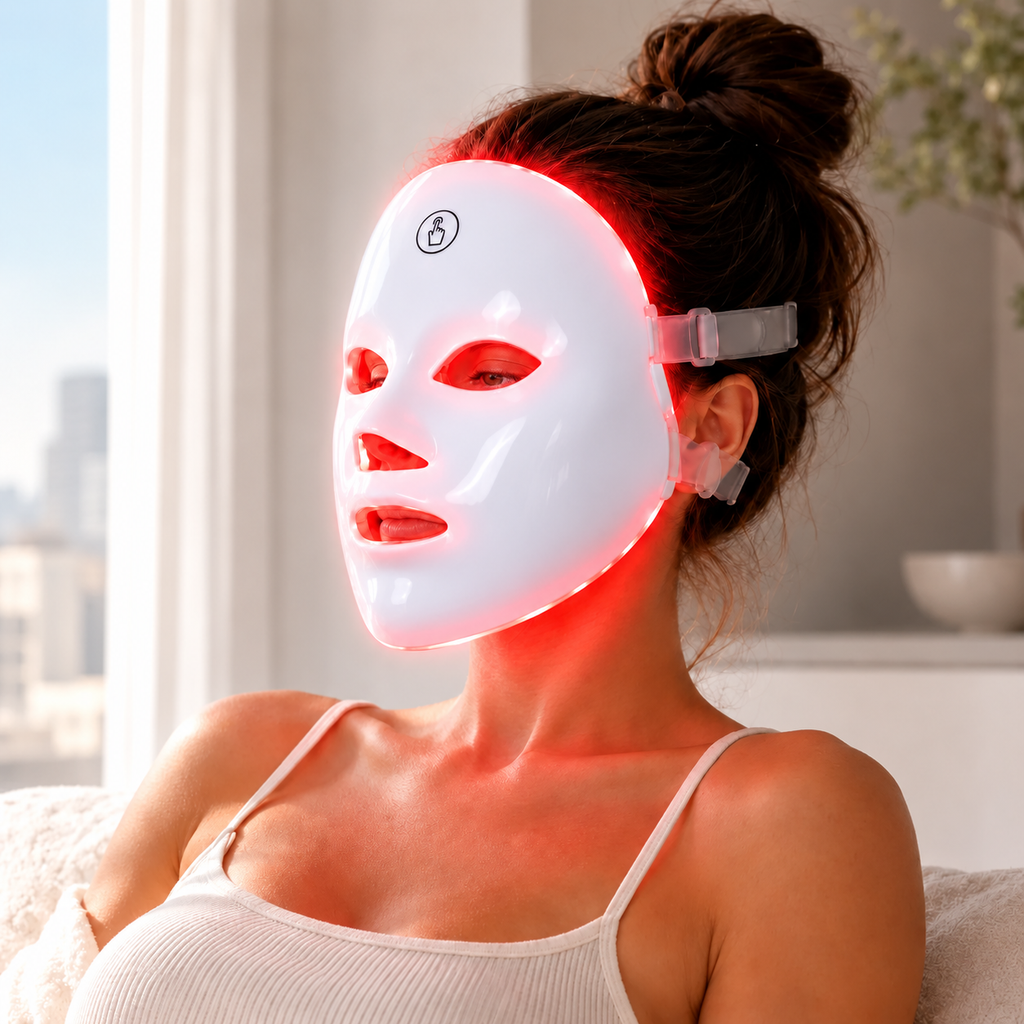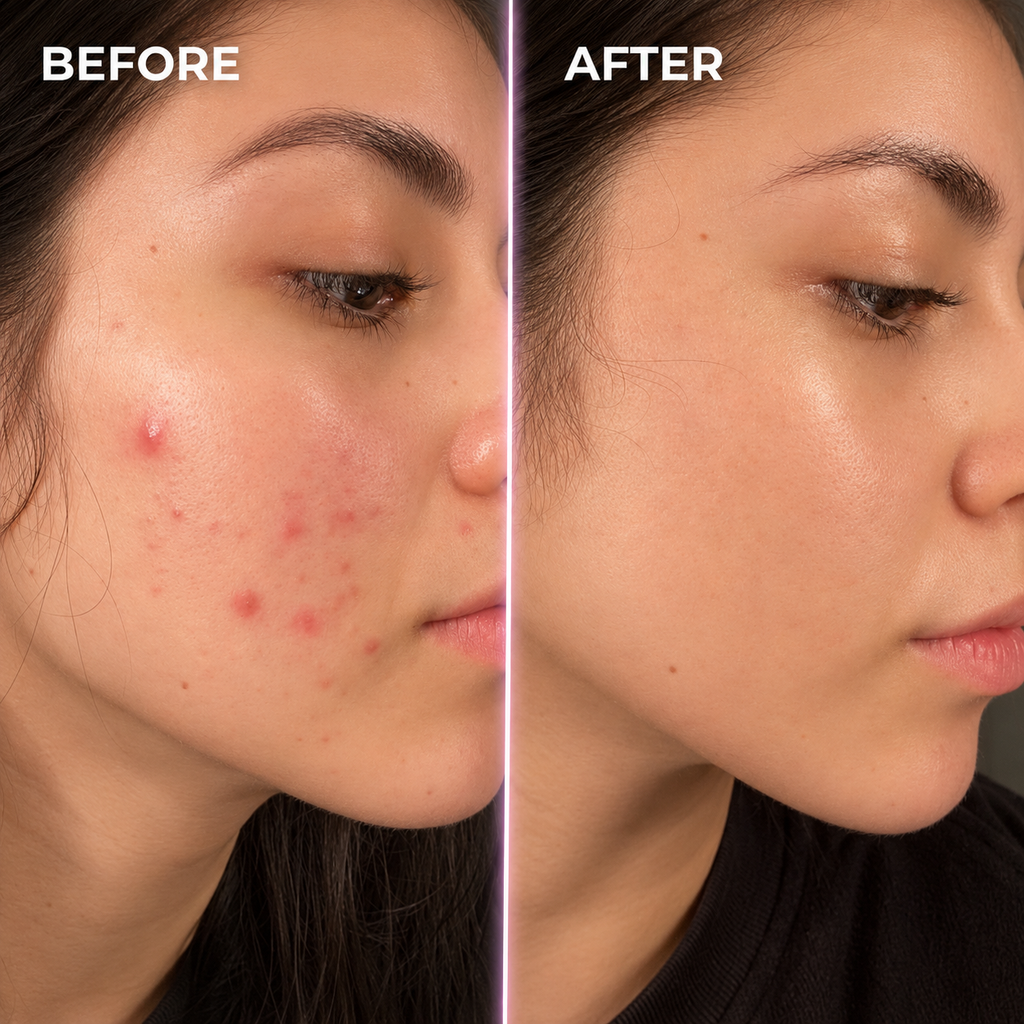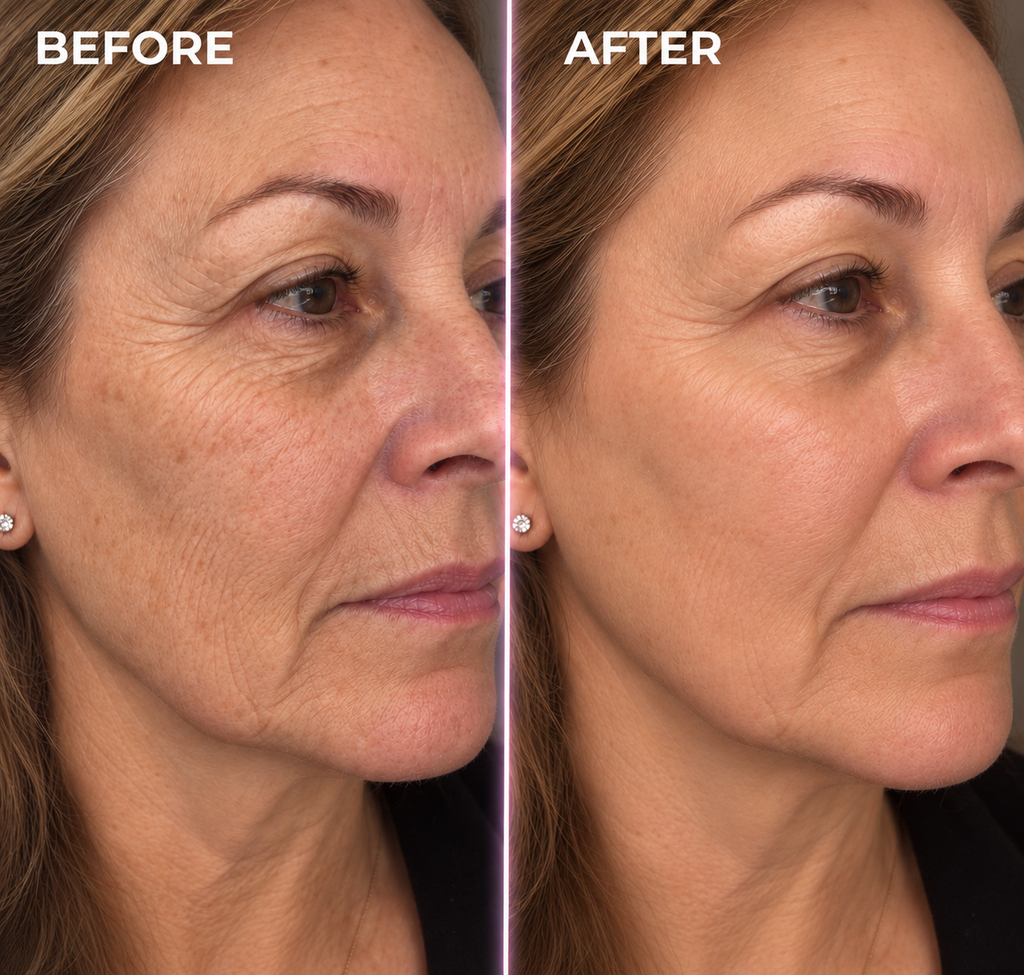
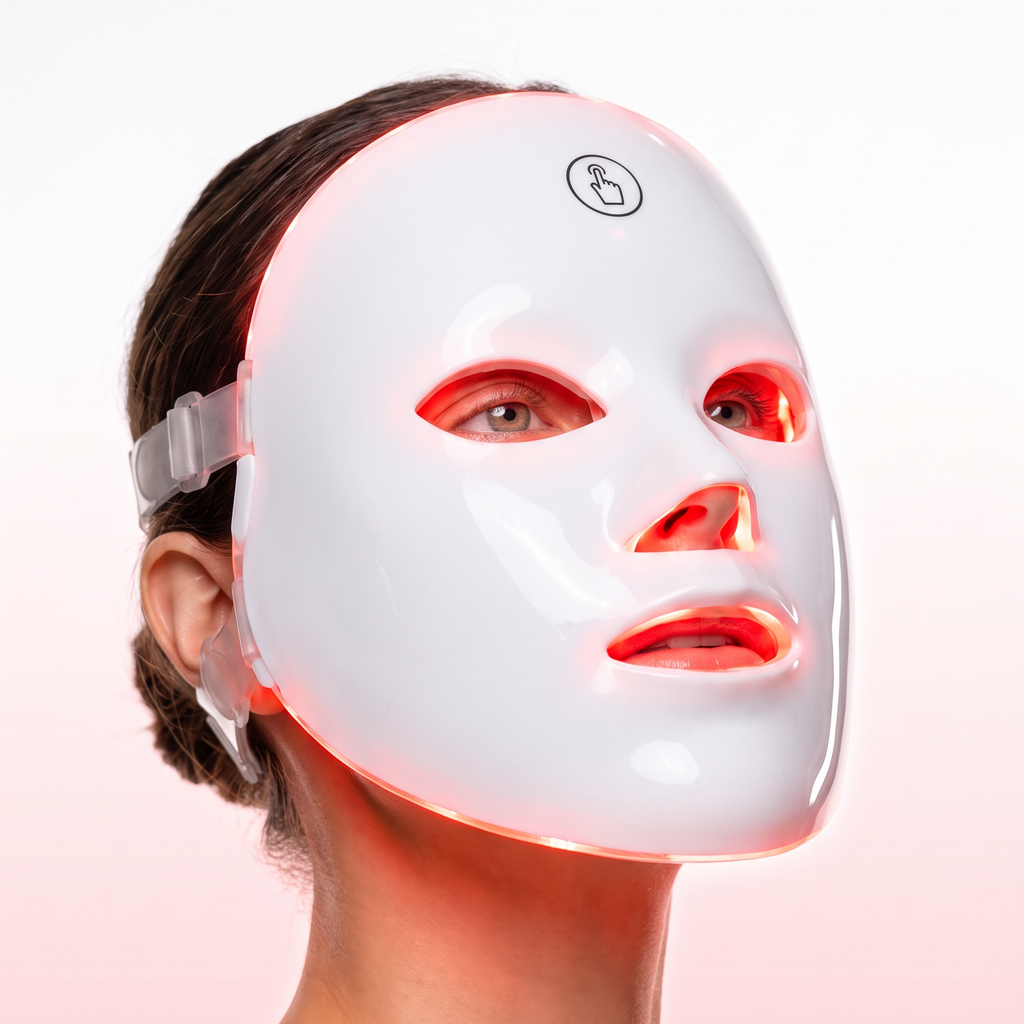
Not all LED light is equal. Here is exactly what each wavelength does, how deep it penetrates, and why the right combination matters more than the number of colors.
If you have shopped for an LED mask, you have seen the marketing: seven colors, ten colors, a rainbow of promises. The truth is that a handful of well-chosen wavelengths do the heavy lifting. Here is what actually matters.
633nm — Visible red light
Sitting in the visible red spectrum, 633nm penetrates the upper layers of skin. It is the classic anti-aging wavelength, stimulating fibroblasts to produce collagen and elastin while improving surface tone and radiance.
830nm — Near-infrared
At 830nm the light becomes invisible and travels deeper, reaching the dermis. Near-infrared is prized for reducing inflammation, supporting wound healing, and driving the deeper repair that firms and plumps skin over time.
1072nm — Deep near-infrared
The longest of the three, 1072nm penetrates deepest of all. It supports circulation and cellular repair in the lower layers, complementing the shallower wavelengths for full-spectrum results.
Why the combination wins
FlowLux layers all three so a single 15-minute session addresses the skin at multiple depths simultaneously — something single-wavelength devices cannot do.
- 633nm targets surface tone and collagen
- 830nm calms inflammation and drives deep repair
- 1072nm supports the deepest cellular processes
VC-Backed • Built by 4 Dermatologists
Ready to start your glow up?
Experience the first AI-enhanced red light therapy mask — clinical-grade results, an affordable $115.
Shop the Mask